Pages

Do You Know How Easy it is to Make Burgers & Why You Should?


I'm going through all my old posts and updating the images, SEO etc. and was reading an earlier post on Michael Pollan’s excellent book Food Rules.  In it I mention how strange it is that people would rather buy a burger from MacDonalds or similar than make one.  I thought I’d extrapolate on this (Madam!).
homemade burger vs takeaway, how to make a burger
Do you know how easy it is to make a burger? 

If not this is what you do …

~   Get some fresh but not too lean minced beef – you want your burger to be juicy.
~   Divide it into portions the size you would like your burgers but treat the meat gently as overworking it will toughen them. I have always made 225g/8oz burgers both at home for my real man and when cooking professionally. Allow me to go off on a small tangent here ...

homemade burger, how to make a burger


According to McDonalds themselves their cooked beef patties in a Big Mac weigh approximately 66g/2.3 ounces each so that’s a little under 4.6g/5oz. Even allowing for shrinkage you can do way better than that! Anyhoo …


~   Heat a frying pan and grease lightly.
~   Season your burgers on both sides with salt and black pepper. The salt is important because not only does make the burger tasty it helps form a good crust on the meat.
~   Cook your burger till perfect by browning over medium high heat according to the timings below on the first side without disturbing it. Flip onto the second side and finish cooking. Times may vary a little according to the thickness of the burgers.
Rare – 3 minutes per side, feels soft and juicy.
Medium – 4 minutes per side, feels springy.
Well Done –  5 minutes per side, feels firm.
~   If you top your burger with something eg. bacon, cheese etc. cover the pan briefly to heat and melt the topping or, better really if you can,  pop the topped burger into a hot oven or under a hot grill for just a minute to heat briefly.
~   Serve in a burger bun (toasted or not, to your taste) with whatever you fancy eg. mayonnaise, bbq sauce etc. plus real cheese, bacon, onions and so on.

Do you want a dimple in the bottom?


~   They do say you should make a small depression in the burger on one side which, apparently, helps the burger cook evenly and stay flat.  I have never done this and always been happy with my burgers but you could give it a try.

6 important points when making burgers …


~   DON'T crowd the pan; if cooking more than one burger there must be space between them or they will steam rather than fry.
~   DON'T press or flatten burgers during cooking because this squeezes out the juices, compresses the meats and really irritates me!
~   If the meat seems stuck to the pan when you want to turn it wait a little while; once a good crust has formed it will release itself .
~   Only flip once.
~   Don't cut into the burger to see if it is done at this releases yummy juices.
~   As with all meat set aside to rest in a warm place for a few minutes before serving.


homemade cheeseburger, how to make a burger

5 Reasons Why You Should Make your Own Burgers

pros and cons of making homemade burgers pinterest image
Please pin this and spread the word!
~   You will save money

Big Mac (just an example - other burger suppliers are available!)
£.3.19  comprising 132g ground beef (possibly and possibly not with additives), one white bun, some lettuce, a slice of processed cheese (or cheese product to be exact i.e. not real cheese).
or ...
Homemade Burger
£1.80 approx comprising 225g ground beef, 2 rashers back bacon, a generous portion of lovely mature Cornish cheddar, a spoonful of freshly fried red onions, lettuce and baby plum tomatoes, white burger bun.

~   You will save time

As I mentioned above, if you have the ingredients, making a burger at home is so much quicker it takes about 10 minutes from taking the meat out of the packet (although longer if you also do chips).  The alternative is driving to, parking outside and queuing in a take away and then driving home. Not only that, your food is fresh from the stove so in prime condition

~   You can eat “cleanly”

Even if bought in foods don’t contain any chemicals, e-numbers,  etc. they may still be high in salt, sugar and/or fat.  When you make your own you know exactly what is in your food.

~   You can Personalise your Burger


Season to taste i.e. your taste or perfect for whoever you are making it for . Make your perfect burger with whatever seasonings or additions you fancy; spices, garlic, smoked salt, bits of crunchy bacon etc.

~   Be happy – I haven’t looked into it much but have read that eating fast food can make people depressed and not just because it is not quite what they wanted!

So ~ your choice …

This is just one example of why you should cook your own food – it is real and fresh, can be made exactly as you like it and is also cheaper. Go for it!

Speaking of books ...


A new edition of my leftovers cookbook, giving recipes, ideas, storage instructions, handy hints, food pairings and cook's treats for 450 different potential leftover foods is now out – Creative Ways to Use Up Leftovers, read more here.
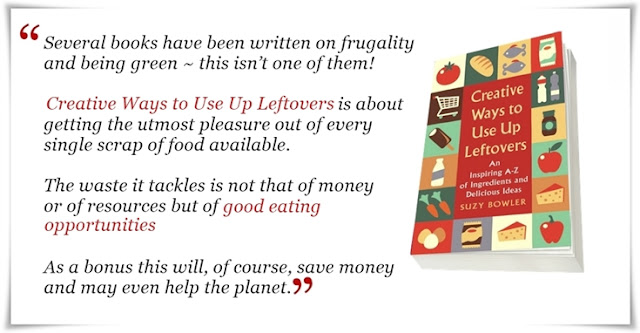

creative ways to use up leftovers


How to Store Leftover Food Safely - what a good idea!

instructions on cooling, chilling, storing and reheating leftover food
Please pin this to help other
people stay alive!

I have just read on a site called Read & Digest a post titled Avoid Eating these 4 Leftovers at all cost especially the 3rd one and, whilst I respect what they are saying, I certainly do not agree we should avoid eating them!

In three out of the four leftovers the only problem was the danger of incorrect storage and insufficient reheating. The fourth one is at the end of this post!

According to the article, and completely correct, failing to cool, store and reheat leftovers properly can have dire results.  
They are right, for instance rice ...


How to Deal with Leftover Rice


When saving leftover rice cool it as quickly as possible; I rinse the rice I'm not using immediately under cold running water as soon as it has finished cooking. Once cool refrigerate immediately and make sure it is utterly steaming hot before eating.

It is, however, ridiculous to throw away good food, instead FFS (excuse me!) learn to store and use leftovers properly.


How to Cool Leftovers


Leftovers should be cooled as quickly as possible – aim to have them cool enough to put in the fridge within 90 minutes.  Here are four ways to achieve this …

1.   Decant the leftovers into a cold shallow dish.  Spread the food out so that it has as large a surface area as possible but don’t compress it, it should be loose packed.
2.   Divide the leftovers between several smaller shallow containers and continue as above.
3.   Stir runny dishes such as soup or casseroles frequently to bring the hotter food to the surface to cool.
4.   If possible put the cooling food in a cool (but clean) place, even away from the cooker might help.

Never leave the food out for long periods, don’t leave out overnight.

How to Refrigerate Leftovers


~   The fridge should always be at 5oC or below.
~   As soon as the food is cool enough put it the fridge, uncovered, to allow it to rapidly chill right down. (You could then freeze it if you wish.)
~   When completely cold put it in a clean airtight container, a freezer bag is good, even if you are not going to freeze it.  If using a bag, squeeze out all the air, if a box choose one the correct size for the food so there is not a lot of air in there.

Freezing Leftovers


~   Your freezer should be at -18oC and your leftovers completely cold and carefully stored as above.

How to Reheat Leftovers


See here for specific information on how to reheat different leftover foods but, generally speaking:

~   Use up your fridge leftovers within two days.
~   Always reheat food to piping hot, at least 75oC/165oF and maintain this heat for 2 minutes.
~   If reheating in a microwave stir the food around a couple of times to avoid cold spots.
~   Do, however, remember that foods can be spoiled if reheated to too high a heat, life’s never easy, is it! Make absolutely sure not to boil things! 

Important Point about Leftovers


This post is all about storing leftovers, but I want to make a very important point.


leftovers can inspire a new meal, a snack or a cook's treat


This is why I have written a whole book of creative ways to use up leftovers. It is called Creative Ways to Use Up Leftovers and that is no coincidence!  As it says in its subtitle it is An Inspiring A – Z of Ingredients and Delicious Ideas. 

ultimate recipes and tips for leftover foods
Great Preview Here!

This is actually the second edition of my book which was previously known as The Leftovers Handbook.

Oh, and this is the leftover I am not sure about …

Leftover Vegetable Oil


According to the Read & Digest reheating polyunsaturated oil that contain linoleic acid releases a toxin that has been linked to all sorts of problems such as heart disease, Alzheimer’s, some cancers and more.  They may well be right, I am not going to get into this as it is not something I know much about. 

Used cooking oil is one leftover that doesn’t even inspire me much!


18 Ways to Use Up "Leftover Wine" ~ Deliciously!


Diogenes-wine-quuote
Nice pinnable quote by
Diogenes (412 BC-323 BC) –
 the founder of Cynicism!

When thinking about writing this post I made a note to myself to explain the term “leftover wine” but I just can’t – it seems to be an oxymoron. I suppose it could happen so if, inexplicably, you do have leftover wine here are my thoughts and ideas.

Leftover Wine Generally


~  My first idea ~ if it’s still good enough to drink, drink it!

~  Freeze it!  Do so in ice cubes and you have a ready to use “splash of wine” to add to your cooking as and when you need it.


~  Add to a pan sauces. These quick, easy and delicious sauces certainly benefit from a bit of vino. 

~   Similarly stir into gravy. See my easy way to make real gravy here and act accordingly.

~   Braises, Stews and Casseroles all take kindly to a little wine. 

~  Add a little wine at the start of cooking risotto – apparently it should be lightly warmed so as not to shock the rice when adding to the pan! 

Wine Vinegar


Sometimes wine turns to vinegar without any help at all but here are a few guidelines so as to have a better chance of success.

a bottle of organic vinegar
2 sterilised jam jars
leftover wine

The reason I say organic vinegar is that this is more likely to contain strands of vinegar ‘mother’ in it.

~  Put 2½ cm of the vinegar into each jar and allocate one for white wine and one for red.
~  Pour leftover wine into the appropriate jars and cover with cheesecloth secured with a rubber band.
~   Store at room temperature topping up with leftover wine as it occurs, the liquid in the jars will evaporate so it is important to keep adding to it.
~  After about a week test the vinegar and as soon as it tastes good to you it is ready to use.

If a new vinegar mother has formed in the jar use it to start a fresh batch.

Leftover Red Wine


cooking-with-red-wine
~  Chorizo in Red Wine – this is a delicious way of cooking chorizo and delicious on toast with a little Boursin!  

~  Make a Gastrique, this is a useful reduction of wine, sugar and water which adds a great boost to dishes, and is also great drizzled over blue cheese, added to pan juices.  Once you’ve made your gastrique you can then make ...

~  Caramelised Wine Vinaigrette – whisk together 60ml red wine gastrique and 120ml olive oil, add a squeeze of lemon juice and season to taste.
  
~  Wine Glazed Shallots – these are lovely as a side to cheese, steak etc. and good on pizza. 

Pears Baked in Red Wine


6 not quite ripe pears ~ Comice are particularly good
250ml red wine
50g cold butter
100g soft light brown sugar
1 cinnamon stick

~  Preheat oven to 200°C/400°F/180ºC fan/gas 6.
~  In an ovenproof dish of size to hold the pears snugly in one layer, melt together the wine, butter and sugar.
~  Peel the pears and add to the pan turning to coat.
~  Add the cinnamon stick.
~  Cover the pan (foil will do) and bake for half an hour.
~  Remove from the oven and turn the pears in the juices.
~  Cover and continue baking till soft and tender - about 40 minutes.

Serve warm with clotted cream or ice cream.

~  Mulled wine syrup is the best way of making mulled wine and very useful to have in the storecupboard –   
  

Leftover White Wine


cooking-with-white-wine
~  Make a spritzer – just a little white wine topped up with sparkling water.

~  Fromage Fort is a French potted cheese which uses leftover cheese and leftover white wine! 

~  French Onion Soup, somewhat surprisingly, is made with white wine. 

~  White Wine Vinaigrette – substitute white wine for some or all the vinegar in the basic vinaigrette recipe here and adjust the flavour with honey and lemon juice. 


Onion, White Wine & Parmesan Tagliatelle – serves 4


 3 x 225g onions
45g butter
60ml dry white wine
500g dried tagliatelle
45g freshly grated Parmesan
freshly ground black pepper
a handful of chopped parsley

~   Cook the onions my favourite way till utterly tender.
~   Add the wine and simmer till it has disappeared.
~   Cook the tagliatelle in plenty of salted boiling water.
~   Drain and toss with the winey onions and grated cheese.
~   Taste and season using plenty of pepper then toss together with the parsley so that it looks as good as it tastes


Lots of ideas and recipes for using up leftovers of all sorts in my book Creative Ways to Use Up Leftovers. 

How to Make a Warming Winter Stew, Braise or Casserole


Today I am braising the knuckle end of a leg of lamb for our dinner. I can’t wait, its lovely aroma fills our little home, it will be delicious!

Here’s the recipe …

Wine Braised Leg of Lamb


This is a brilliant way to cook lamb shanks too, of course.

2-3 tablespoons olive oil
half a leg of lamb – knuckle end
salt
1 large onion, sliced
1 carrot – coarsely chopped
2 garlic cloves – finely chopped
½ tablespoon tomato paste
1 tablespoon flour
300ml red wine
300l beef stock

~   Heat the oil in a saucepan large enough to hold the meat on its side.
~   Season the meat with a sprinkling of salt and carefully brown on all sides in the pan. Set aside.
~   Add a drizzle more oil and cook the onions and carrots, stirring often, till softening and just starting to take colour.
~   Stir in the garlic and cook gently for a minute.
~   Stir in the tomato paste and cook gently another minute.
~   Stir in the flour and, yes, cook gently another minute.
~   Add the wine and stock and bring to the boil stirring and scraping to dissolve any meat juices on the bottom of the pan.
~   Return the meat to the pan and if necessary add a little stock or water to bring the liquid to just about half way up the meat.
~   Turn the heat to low.
~   Cover with foil and then the lid, so as to seal the pan.
~   Simmer for 2-3 hours till very, very, very tender and wonderful.
~   If the sauce is a little runny for your taste remove the lamb and set aside whilst you boil the gravy down a little. If it is far too runny – try adding a little beurre manie!  See below.
braised-lamb-shank
Nice Pinnable image ↑
Now, for all the specific instructions above, this is a basic or core recipe.  Once you know how to do it you can stew or braise pretty well anything!!!

Here are some guidelines and suggestions …

Braise vs Stew vs Casserole


In a stew the meat is usually diced or in pieces and is completely covered in liquid when cooking.  Casseroles are pretty much a stew cooked in the oven!  Braising is the method generally used for a single large piece of meat and the liquid normally only comes half way up the meat.   

The Meat


Happily, the best meats for stewing and braising are the cheaper cuts!  These are usually tougher or more hard-working meats such as shin of beef or lamb shanks – the gentle cooking makes them tender and luscious.

 
Browning the Meat - the Maillard Reaction


browning-meat-maillard-reaction


I wrote, a few months ago, a post on making delicious pan sauces where I gave a lot of details on Pan Searing, so please have a look.  It is an important step in making a delicious stew.


The Stew Base


Once the meat is browned and set aside the vegetables are added.  Onions are pretty well compulsory.  

Different cultures use different combinations of aromatics to create different effects.  In France the classic combination is onion, carrot and celery and it is called mirepoix.  In Italy, Spain and other Latin countries they do a similar thing, but they call it sofrito and often add garlic, fennel, parsley plus finely shredded prosciutto.  

All you need do is choose what you fancy, to compliment your main ingredient and then add them to the remaining fat in the pan after setting aside the meat.

Liquid for Stewing


Well, at a pinch water will do but we can do so much better than that! Use an appropriate stock, homemade or bought in; beef stock will work for lamb too, chicken stock is good for pork and veg stock is fine with chicken and pork. The addition of wine is  a great flavour boost, it is normal to use red with beef and lamb, white with chicken and whatever you fancy with pork but there are exceptions e.g. Coq au Vin is made of chicken and red wine.  Steak in ale is a great combination as is pork braised, or stewed, in dry cider. Again, it’s up to you.

Other Additions to your Casserole/Stew/Braise


Use whatever you like, within reason, add bacon or chorizo to chicken stews, stir a little apple sauce  into pork casserole, a spoonful of redcurrant jelly can do wonders for a lamb stew. Season to make you happy, I like lots of black pepper in most things. Black garlic  is great with beef, stir a couple of chopped cloves or a spoonful of paste in for the last half hour or cooking. Tomato paste cooked in with the vegetables, as above, adds a subtle sweetness – go for it!

To Thicken the Gravy 


Some people suggest coating the meat in seasoned flour before browning as it will help thicken the sauce.  I used to do this but have decided against it in more recent years, the reason being that the flour is easily burnt and hinders the browning of the meat.  Instead I add flour to the sautéed vegetables before adding the liquid.  If, once cooked, the gravy is too runny to just cook down a little then I would recommend (as above in the lamb recipe) the addition of …

how-to-thicken-sauce
Why not pin for future
reference
?

An Easy & Delicious Way to Thicken Sauces


“Beurre Manie” means kneaded butter and is simply equal quantities of flour and soft butter mashed together to form a smooth paste. You probably only need a spoonful or so of each but if you make too much it is a useful thing to keep in the fridge.

Remove and set aside (we cooks do a lot of setting aside!) the meat.  Have your gravy at a simmer and whisk in a little of the beurre manie, bring to a boil, whisk and simmer till the sauce thickens. If you are not happy with the result repeat with a little more beurre manie till you are. If you make it too thick stir in a little more stock or water.

Turn off the heat and return the meat to the pan.  If serving soon, cover the pan to retain the heat.  If storing for later, transfer the stew to a fresh cold dish and cool completely before covering and storing in the fridge.


Ooh, I've just had an idea. Why not use a flavoured butter (e.g. garlic and parsley for chicken stew) to make your beurre manie!

Some Helpful Tips when making a Stew


~   ALWAYS get meat out of the fridge a while before cooking and allow it to come to room temperature (21°C / 70°F - ish). It will then cook more evenly and also a little faster.
~   Dry meat with a kitchen roll/paper towel before cooking, this will allow it to brown without sticking.
~   Get the pan good and hot before adding oil and then get the oil good and hot before adding the meat.
~   When browning meat ALWAYS leave plenty of room between pieces, otherwise what they will actually do is steam rather than fry and they'll end up pallid and soggy.


8 Ideas for Leftover Stew


how-to-stew-casserole-meat

~   Use to sauce pasta.
~   Dilute with more stock to make a soup or, if just a little leftover, stir into a soup.
~   Stir through risotto.
~   Fill baked potatoes.
~   Eat on toast
~   Extend the stew with beans to make enough for a meal.
~   If you have enough make a pie topped with pastry or mashed potato (like Shepherd’s Pie) or bake topped with thinly sliced potato to make a hotpot.


If I can think, suddenly, of 8 ideas for leftover stew don't you wonder what I have come up with for the 450 potential leftovers in my book, Creative Ways to Use Up Leftovers?


leftovers-recipes-book


Best Before Dates - a Rant and a Good Idea

We have just been up-country, as we say in Cornwall, visiting family, having a belated Christmas dinner together (for the first time in about 20 years!) and seeing how grown and wonderful my great niece Amelia has become.  So that’s why I haven’t written for a bit.

leftover food, ideas, recipes, cookbook


Whilst there I picked up a leaflet from the East of England Co-op who have had a good idea. They will now sell products past their ‘Best Before’ date in their 125 food local stores for a nominal 10p.  I don’t know if they intend rolling this out to the rest of the country, but it is surely worth investigating. 


According to the leaflet …
food waste uk. food waste, zero waste, leftovers
I have read different but equally horrific figures elsewhere but however much food waste it is it’s too much!  This is something I have ranted on about for years.  In fact, at the end of my book Creative Ways to Use Up Leftovers I wrote …


BEST BEFORE DATES – A SHORT RANT


            I really don’t want to encourage anyone to take risks with their food but would nevertheless like to moan on a bit about ‘best before’ dates. 

         Whilst I am, of course, as delighted as the next person by a bargain I am also often irritated. Fruits and vegetables have sometimes not reached their ‘best after’ date when being offered as past their prime. I have bought out of date ‘ripen at home’ avocadoes that weren’t soft for weeks, I once lost a bargain white cabbage in the car when bringing in the shopping and it was still OK when I found it there ten days later (it was cold out) and I even snapped up a healthy growing basil plant with roots for 10p because it was ‘past its best before date’!

Cheese is another case in point. Bearing in mind that it was developed as a way to preserve milk and that many cheeses improve over time I was surprised last Christmas to see small gift cheddars, coated in wax, which were supposedly out of date by 9th January. Why? What would happen then? And don’t get me started on honey!

        ‘Are best before dates a cunning ruse to make nervous people throw food away and buy more?’ I ask myself cynically. According to Defra these dates indicate how long a food can be expected to retain its optimal condition and yet in my own experience many bargains have not even reached optimal condition by that date. May I therefore suggest that you rely on your own brain and your senses of smell and taste?

‘Use by’ dates are an entirely different matter as they concern food spoilage and safety and I don’t recommend you mess with them.


So, as I’ve said before …

Please, please, please learn to cook so you can use up all the food that you have available in utterly delicious ways. This is just one of my 7 Excellent Reasons to Learn to Cook. Go for it!!! 

Oh, and don't forget to pop down the Co-Op if you happen to be in the East of England!

delicious-ideas-for-leftovers, food waste, zero waste

In Other News …

A new edition of my book is to be released on 1st March.  It is now titled Creative Ways to Use Up Leftovers and can be ordered here. 


I look forward to meeting it myself!