Last night my excellent neighbour Julie gave me a bunch of
sage from her garden, and when I say a bunch I really mean A BUNCH!
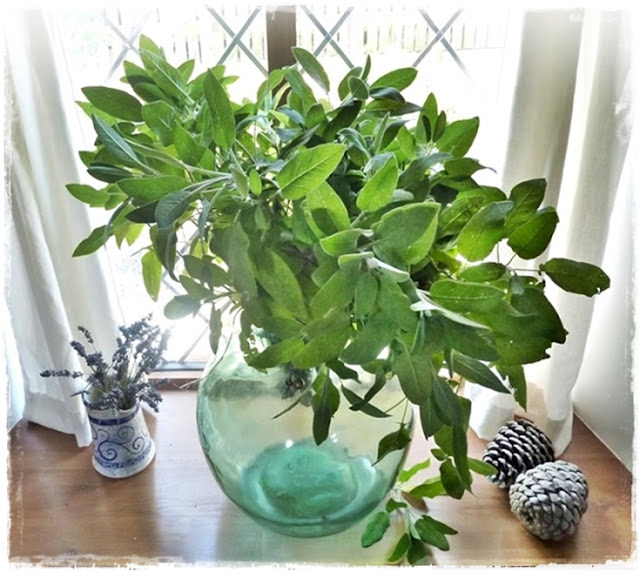

The house smells wonderful!
After admiring and sniffing for a while I decided to put
some aside for later so I froze a batch in oil, have some drying and made sage
butter.
How to dry herbs
In the case of sage this may also keep evil spirits away
from the house – certainly burning sage leaves does!
~ Remove all damaged
leaves and make sure the leaves and stalks are completely dry.
~ Assemble a few small
branches of your herb and tie together.
~ Poke a few holes
in a large brown paper bag and insert the bundle of sage, leaves first.
~ Gather the bag
opening around the stems and tie shut making sure to leave the sage plenty of
room in the bag.
~ Hang upside down
somewhere nice and airy.
~ They should take
about 2 weeks to dry but keep an eye on them.
~ When fully dried out
store in an airtight container in a cool dark place.
~ Keep them whole
dill needed then crush – this way they will release the most flavour.
1 teaspoon of crumbled dried herbs is about the same as 1
tablespoon of fresh chopped herbs.

As you can see I’m doing a bit of lavender too.
How to freeze herbs
There are several ways to freeze herbs, which are ...
~ Stuff them into a
freezer bag till well packed and squeeze out as much air as humanly possible.
Freeze.
~ Coarsely chop or
keep small leaves whole, divide between hollows in an ice cube tray and top up
with your choice of water, stock or olive oil.
This works really well as once frozen the cubes can be decanted into a
freezer bag and then you can add a cube here and a cube there as needed. I didn’t do this with mine, this time,
however as I didn’t want to contaminate the freezer with lots of sage flavoured
ice cubes – my real man might object.
~ Purée torn leaves
with twice their volume of olive oil and then freeze in an airtight container.
The beauty of this method is that the purée doesn’t freeze very hard so you can
actually scrape out what you want.

Sage Butter
Two other way to save sage for later ...

Sage Vinegar
Put clean sage leaves in a sterilised jam jar, enough to
loosely fill it. Add enough cider vinegar to fill the jar then put on the
lid. Keep for 2-3 weeks before using but
do give it shake every now and then. This, of course, makes great vinaigrette or
marinade for porky items – see here for how to make vinaigrette, it's easy!

Sage Honey
Same as above but using runny honey! This is very good brushed on pork, ham and
bacony things or with cheese.
See here for lovely Honeyed Stilton on Toast.
This left me with ...

So here are lots of ideas (I’m certainly going to need them) for using
sage.
Quick ideas and recipes for Sage
 |
| Please pin for future reference and to make me happy! |
~ Sage leaves either
as naked as the day they were born or dipped in a light batter and deep fried make a great crispy garnish.
~ Mashed potatoes -
warm a little chopped sage in a tablespoon or so of melted butter and allow to
steep for a few minutes before mashing into hot, freshly cooked potatoes.
~ As sage goes so
very well with pork try mixing some in with minced pork and make pork burgers
and bit of grated apple would go well in these too.
~ Toss chunks of
parsnip and of apple in olive oil together with fresh sage, salt and pepper and
roast to serve with pork.
~ White Bean and
Fresh Sage Dip – information on bean dips here – use cannellini beans, fresh sage and lemon juice or whatever combo you fancy!
~ Add sage to polenta,
it works really well. See here for how to make polenta, you’ll have to read down a bit for the recipe
~ Add a bit of fresh
sage to egg dishes as in this chorizo, asparagus and sage scrambled eggs that I had for lunch yesterday.
~ Sage and Cheddar
Cheese Straws – see here and add sage!
Did you guess?
~ Make a dipping oil
for good bread, or, related to this ...
Sage and Walnut Pesto
60g walnuts
–preferably toasted for deeper flavour
2 cloves garlic
30g of fresh sage, coarsely chopped
30g fresh parsley, coarsely chopped
60ml cup olive oil
30g of fresh sage, coarsely chopped
30g fresh parsley, coarsely chopped
60ml cup olive oil
30g grated Parmesan
salt and pepper to
taste
~ Coarsely chop the garlic and walnuts in a food processor.
~ Coarsely chop the garlic and walnuts in a food processor.
~ Add the herbs and chop
in with the nuts and garlic.
~ Gradually process
in the olive oil.
~ Stir in the cheese
then taste and season.


This can also be made with a pestle and mortar which results
in a more rustic and very pleasant variation.
Toss with hot pasta or add to sauces, cheese on toast, sandwiches, dressings
etc.

Sage and Onion Stuffing
Traditional Sage and Onion Stuffing probably springs to mind
for most people at the mention of sage. I always make my own stuffing,
sometimes with and sometimes without sage – here is a loose recipe or
guideline.
~ Fry coarsely
chopped onion together with your choice of carrot, celery and garlic in a
little oil till starting to take colour. If adding raw meat eg. bacon or
sausage do so now.
~ When it is turning
golden in places add a handful or two of diced or torn dry bread and just
enough hot stock to moisten it.
~ Add a knob of
butter, cover and set aside for about 20 minutes.
~ Stir in the butter
and make sure that the bread is thoroughly soaked through but not sitting in
liquid. If it is drain it off.
~ Taste, season and
add any cooked meats, herbs (time for the sage!) or spices.
~ Stuff into a bird,
roll in a joint of meat or put in an ovenproof dish, drizzle with a little more
butter and bake alongside the roast for the last 20 minutes or so of cooking.
The top should be crisp and golden.
Brown Butter and Sage Sauce
Serves 3-4
A simple but famous sauce which is excellent on pasta,
gnocchi and especially butternut ravioli.
Make the sauce whilst the pasta, gnocchi or whatever is cooking.
60g butter
10 medium sage leaves – cut into shreds
juice of half a lemon
50g grated Parmesan
~ Melt the butter in a frying pan and then
continue cooking over medium heat till it turns a golden brown.
~ Add the sage leaves and remove from heat.
~ Stir in the lemon juice and set aside till
needed.
~ When the pasta is done add spoonful or two of the pasta cooking water to the butter sauce in the pan and then drain.
~ Reheat sauce, add the cheese and toss with the pasta, or whatever!
~ When the pasta is done add spoonful or two of the pasta cooking water to the butter sauce in the pan and then drain.
~ Reheat sauce, add the cheese and toss with the pasta, or whatever!
Apparently sage has many attributes healthwise but I’m not
getting into them here other than to mention that it was oft said in
Roman times ...
"Cur moriatur homo cui
Salvia crescit in horto?"
('Why should a man
die whilst sage grows in his garden?')

Tweetables
Please click the links below to tweet.
Please click the links below to tweet.
~ 'Why should a man die whilst sage grows in his garden?' ~ Roman saying.
~ Lots of sage ideas (play on words!)
~ Lots of sage ideas (play on words!)


